
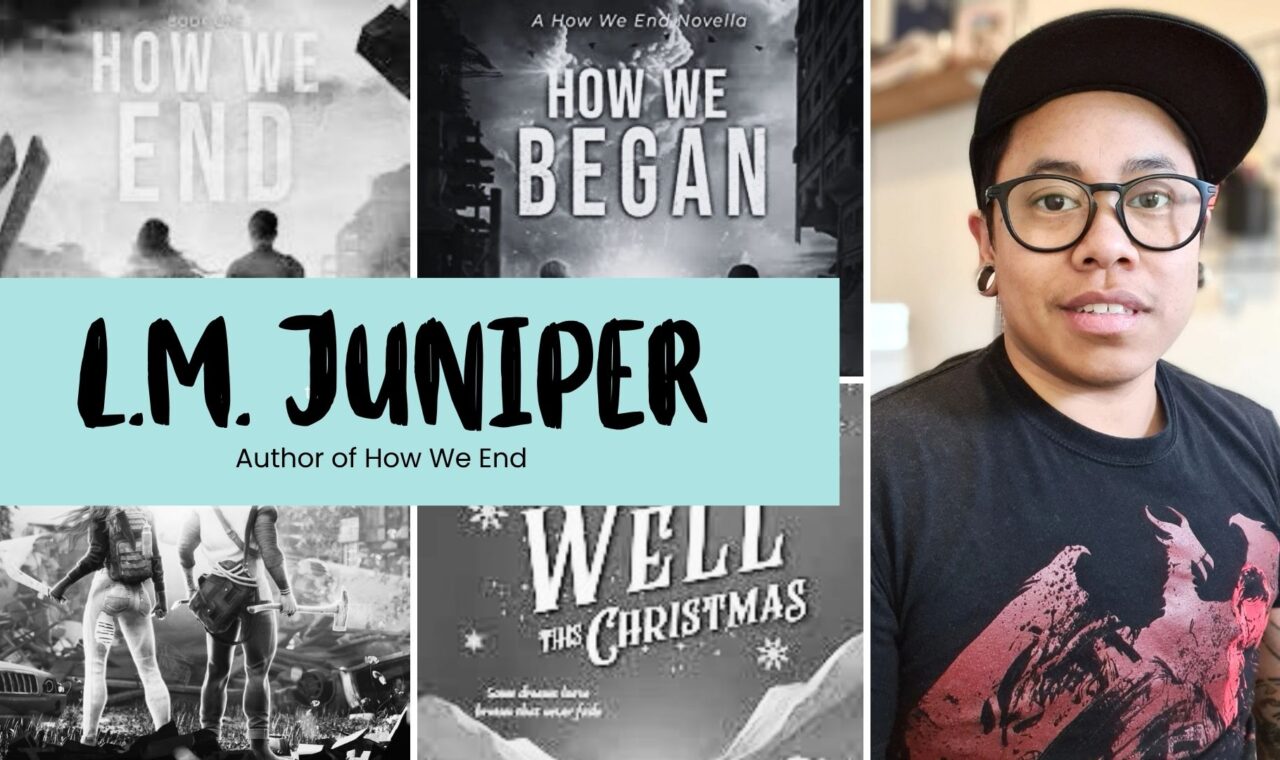
When we talk about underrated authors, the first name that pops up in my brain is L.M. Juniper. They have been in this publishing space for a while now, but they are still popping off. L.M. Juniper is an Indonesian trans and non-binary author who writes LGBTQ+ romance and apocalyptic fiction that focuses on South Asian characters.
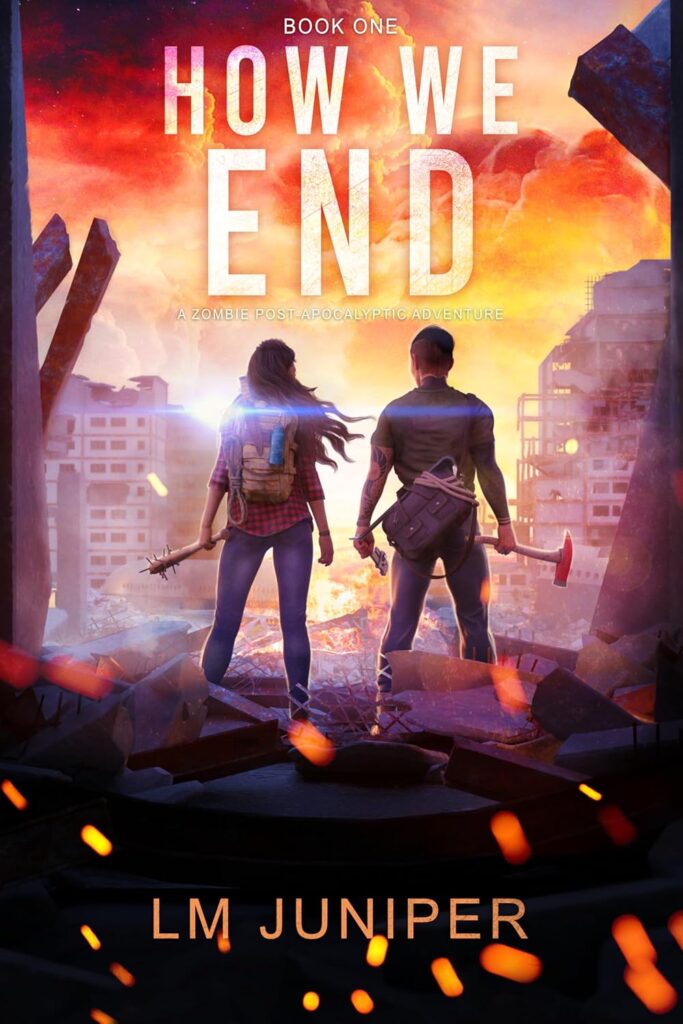
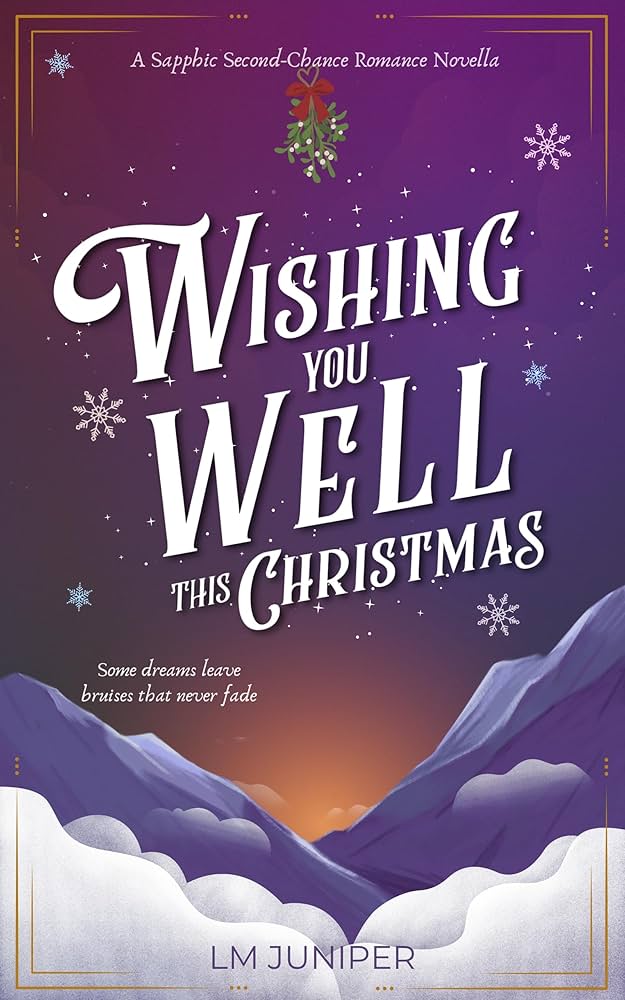
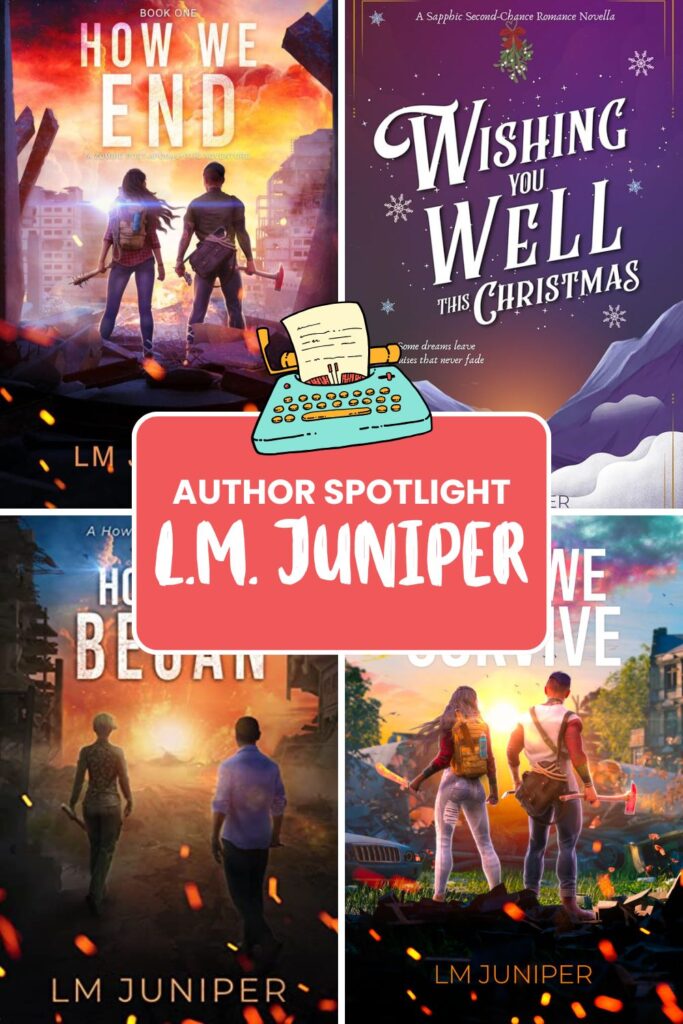
Based out of Europe, they are best known for their book ‘How We End’, which centers around a zombie apocalypse, but now they are branching out into contemporary sapphic romance with their latest release, ‘Wishing You Well this Christmas’.
In this week’s Author’s spotlight, I was honored that L.M. sat down and answered some questions about their writing journey, their inspirations, and their plans for the future.
Tell me a little bit about yourself. Who are you? Where are you from? What do you write?
I’m L.M. Juniper, or as others know me, Elm. I was born in Indonesia and have Balinese roots, but grew up in Sweden. After finishing high school, I traveled a lot and lived in various places, from Baguio City to London. I think all of these places and the people I met really helped inspire me to write the stories I write. Both zombie post-apocalypse and sapphic romances. Though I mostly blame all those games full of missed sapphic opportunities for my love of writing about women falling in love.
Are you queer or trans? What are your labels?
I’m not super strict with my labels. I think of myself as queer, trans masc. I’m pan and ace (Demi) and I like he/him, but also they/them.
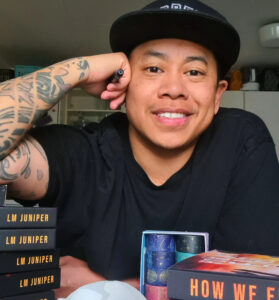
L.M. Juniper – Author of How We End
What inspired you to be an author and why?
I’ve always been writing, ever since I was a kid. I was always such a daydreamer as well. I could spend all days just dreaming up stories in my head. I always knew I wanted to be a write but I never knew how or what stories to tell. And then I became a gamer and whole new world opened up for me in the form of fanfiction.
What was your author journey?
The first things I ever published was Dragon Age fanfics. After that I started writing Mass Effect fanfics. I decided I wanted to become the household name for my particular pairing and for a long time when fans wanted FemShep x Miranda or Kassandra x Aspasia fics, everyone knew to go find Elmjuniper. But I realized fanfic can hold you back sometimes. You can push boundaries, but you still have to sort of play within some of the rules. I started writing my first book in 2015. I took my 6 years to finish.
I don’t think I could’ve written anything earlier or without having written fanfics first. Everyone says you have to have a degree and masters in creative writing. But everything I’ve learned has come from fanfic and my fellow fans. Things from never claim to write a romance and leave readers without a HEA! But I also have trouble with prose and grammar. I’m ESL, and I have dyslexia, so school was never an option for me. But the fandom I was in taught me so much that when I sent my first draft to my alpha, she could see the potential.
Why did you decide to become an indie author? And why?
To be honest, the second I found out about indie publishing in around 2015, I knew that was what I wanted to do. Back then, trad pubs wanted authors with years of experience and training. And they wanted extreme mainstream stories, stories that are white, cishet, normative.
My stories have always been queer. And I knew there was a void to help fill in literature. Especially when it came to the Post-Apocalypse genre. Exceedingly white and cishet, pumped full of alpha males. I’d only found ONE book that had a gay character in it, and that was inclusive of different ethnicities. I was really into the genre, but I want ti see myself as the hero, not just the sidekick or the first zombie fodder. With all this in mind, I knew the freedom of self-publishing was exactly what I wanted. I found, however, at the time, realize how much work it would be. But for me, it’s definitely worth it.
What are the books that inspired you?
One of my favorite authors is Sarah Lyons Fleming. She writes zombie post-apocalypse books like me. What I love about her writing is how she can take the most awful character and make you love them. Another book that has been really transformative and inspiring is Kalynn Bayron’s This Poison Heart. I think for me, it was the first book I read where the author uses words and descriptions to constantly bring back the theme into focus. It was just really clever and inspired me to try it myself. I love books that challenge me in my own writing. I like to pick the bits I love and try to analyze what about the scene I love and try to apply that to my own writing. Mostly, though I actually get inspired by storytelling in games. I think they have a very compelling way of telling stories.
What is your writing routine?
I work in the tube part-time. So from noon until about 4 PM, I try to do things that are writing-related. Sometimes that’s writing, sometimes it’s researching. Lately, I’ve set word count goals per week instead of per day. I’ve got inattentive ADHD, and so daily goals don’t work for me. If I have a weekly I can still catch up if I miss one day. And I always set it way lower than I think I’ll be able to do.
How do you balance writing and your 9 to 5 job?
Driving the tube gives me a lot of time to just sit and think. I’ve found I come up with my best ideas at work when I’m driving. Some of my favourite sentences and descriptions have come from watching commuters and things happening in the tube. At home I’m too easily distracted.
I work a lot from my phone and last year I was able to upgrade both my phone and laptop, so I have a completely seamless workflow between the two. Every time I have an idea or I come up with a sentence, I’ll quickly put it in a note on my phone. I always have my noise-cancelling headphones, and I’m constantly working between 5am-4pm. So it’s helped me write faster. Instead of 6 years, I’m less than a year into my current WIP and not far from finishing it.
Why was it important to write diverse romances?
I’m going to sound like a broken record, but I was just tired of seeing the same old white cishet stories. When I found a sapphic book it was always two white cis main characters. I grew up in a country where representation for anyone who was white was almost non-existent. I still don’t see myself represented very often where I live. I started reading more Black romances and Fantasy, which feels so much more welcoming and familiar to my family and friends. But again, I wanted to see more of me. I think there’s a gap to fill for sure. The first time I saw anything Indonesian was two years ago when I stumbled upon Coral Island by mistake. I’m not kidding when I say I cried when I saw the traditional clothing in it. Representation matters. It helps us feel valid and seen.
What made you want to write dystopian books?
I think dystopian isn’t that different from romance. I think both genres deal with overcoming high-stakes situations. One could be what happens when the world becomes brutal or broken. What happens to humans? Who do they choose to become?
In romance, the high stake might be, do I dare love again after being completely broken? And I think fundamentally these two genres really deep dive into the relationships between people. At least in my experience. Exploring what happens to human relationships and our humanity in a post-apocalyptic world has always fascinated me. So I was excited to write that with a more diverse and inclusive group of people.
What is your method of writing? Plotter or Planster?
Haha! I’m a terrible Plotter. And Pantser. Both of those get me into dire problems. Pantser I waffle on and lose the thread. Plotter, I stump myself and get writer’s block.
I’m leaning towards Plantser. I need a fixed outline. These things happen, and you have to stay within this timeline. Now, I can let my characters explore new things, but I can’t squeeze in every single thing I come up with. Ideas are great! But learning when to use them, and when to leave it behind is truly what’s been helpful for me. This approach allows me to do discovery writing as well, which I love. This method has also greatly improved my writing flow and speed.
How many drafts did you go through before you finished the book?
Honestly, I cry just thinking about it. Haha! With How We Survive, I tried to speedup my workflow by doing word sprints. Worst. Idea. Ever. I was just word vomiting to reach the numbers, so editing took forever, and I had so many drafts. SO MANY. Usually, they say never edit as you write, but I can’t do it.
My first book, I had (once I finished the main story beats) 2 drafts for myself, 1 back from my developmental editor, sent it to my editor, and got that back (1), sent that updated version to beta readers (1). So all in all, ‘How We End‘ was 5 drafts. ‘How We Started?’ 3 for myself, 2 from my developmental editor, one from each beta (4), new final one sent to editor (1), edited draft after editor fixes (1), then proofreaders went through it (1).
So I think roughly around 11 for the sequel. Which is way too many for me. I’ve gone back to editing as I go. That way I know where I’m at in the story and where it needs to go. And that saves me so much time when it comes to pace, consistency etc.
What advice would you give to aspiring authors in your genre?
Write what you love and what you would want to read. Don’t try to follow trends in writing. Should you see if there’s a market for your story? Yes. But that doesn’t mean you should stack your book full of tropes for the sake of tropes. Write the story you daydream in your head. With all the silly butterfly-inducing moments. Whether that be your main characters are kissing or stabbing each other is up to you. We all have our poisons. 😉
What’s one writing rule you believe in and one you think is made to be broken?
Definitely “don’t edit as you write,” it just doesn’t work for my brain. I also think telling instead of showing has its uses.
What is your favorite part of being a writer?
Interacting with readers! Seeing their reactions to my stories, my character art, etc., is the best thing. I’ve met so many incredible people over the years since I published How We End. Professionally as well, and it’s been really amazing and cool.
Growing up, did you know you wanted to become a writer or was it not until you were older that you realized it?
I always wanted to be a writer. My parents actually always encouraged me to write. My entire family is super supportive. My big brother has read all my books, my mother-in-law has read my books, and is eagerly awaiting my smutty sapphic romance. Haha!
How has your writing evolved since you first began publishing?
I think it’s tighter, less waffly, and purple prose like in my fanfics. I’ve learned a lot about how to use writing to denote action and urgency, i.e., short, punchy sentences. I’ve learned a lot of technical stuff that I do inherently without having learnt it; I just didn’t know it was an actual thing. I’ve also learned to better plan a compelling story.
What is your book about?
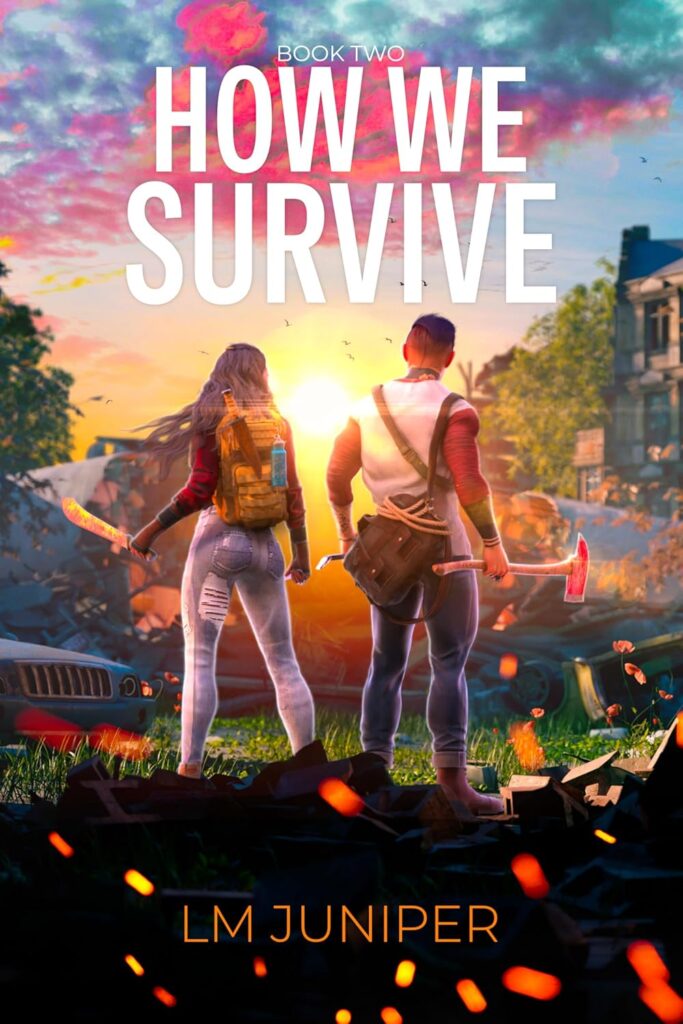
How We Survive series is about a group of people who get stuck in the London Underground. Everything is fine when before the get stuck, but once they get back up to the surface? The world has ended. It follows my MCs Jake and Liv as they try to navigate this new world and make their way back to Jake’s family.
The Wishing Well is about Safi and Nai who were once best friends and girlfriends. They spent every day together until one night something happened that changed their lives forever. The friend group split up and never spoke again. The last summer they spent together wasn’t just magical, it was impossible to forget. And yet they all did.
How did you get the idea for your current book?
My current WIP is inspired by the game Bloom & Rage and Life Is Strange. I played Bloom & Rage and fell in love with it. I think I have something ridiculous like 200 hrs in it. But even so, there were things with the story where I felt I wanted more? So it started off as a fanfic, but then I thought…what if I made my own story and built my own world? You can definitely see the inspiration from both games, but it’s evolved into its own thing.
What do you hope readers will take away from your book?
From HWS series? Sometimes the family we end up with is the one we create ourselves.
For The Wishing Well, without spoiling too much, I hope readers leave with the sense that healing doesn’t always mean returning to who you were before. Sometimes it means becoming someone new, and letting yourself be loved as that person too.
Is there a particular scene or passage you’re incredibly proud of?
In HWS I’m weirdly proud of Marianne. She’s the Prime Minister of England and has to sound incredibly smart. I used all of my knowledge of politics from the Mass Effect trilogy and the stupid council. I somehow made her sound so intelligent and politically savvy. Don’t ask me how!
What’s one thing you know now that you wish you’d known when you started writing?
How long it takes from the first draft to publishing? Wow. That took me by surprise the first time. Also, the fatigue. When it hits—and it does with every project no matter how much you love it at first—you just gotta push through it.
Did you have to cut anything important from the final version of your book?
I had a whole section where one of my characters comes out as ace in HWS. But it took up too much space and felt too lecturing. I also had a really sweet moment between Jake and Liv, but the book was running long, and the scene wasn’t carrying the story forward enough to warrant it staying.
In The Wishing Well, I’ve cut some fun moments between Safi and Nai simply because I’m already at 108k words, and they only just kissed.
After finishing this manuscript, did you immediately start something new or spend three weeks staring at a wall?
If I have something new on the go I jump straight into it. With HWS I sent it off to betas and started TWW instantly. I was already at 20k words when I got HWS back and had to finish it. Then I was instantly back to working on TWW.
What are you working on next?
Once I’m done with TWW, I have three different projects I want to write, but I haven’t decided which one I want to start with. Dark romance, romantasy, or a urban fantasy. Hm…All sapphic, all filled with Indonesian-inspired worlds and culture.
Where can we find you?
Website: https://lmjuniper.com/
Instagram: https://www.instagram.com/author_lmjuniper
Tiktok: https://www.tiktok.com/@lmjuniper
Pin This

Discover more from Loud In The Margins
Subscribe to get the latest posts sent to your email.

Leave a Comment