

As an author, I still struggle with writing descriptions. Writing good descriptions is one of the best ways to immerse your readers in your story, but writing descriptions that capture your readers is harder said than done.
And over the years, I have searched and searched for answers on how to write good descriptions, and I often got wishy-washy books that will give you examples with zero instruction on why those descriptions work so well. And to my horror, it’s just as hard to find useful instruction on how to write a good setting. A lot of the time, I will get a lot of instruction that does not work for neurodivergent writers. So I eventually had to piece together methods that will work for me because writing advice is mostly targeted towards neurotypical authors.
But if you are a neurospicy writer like me who struggles with writing description? I am going to give you a few tips that have made my life so much easier!
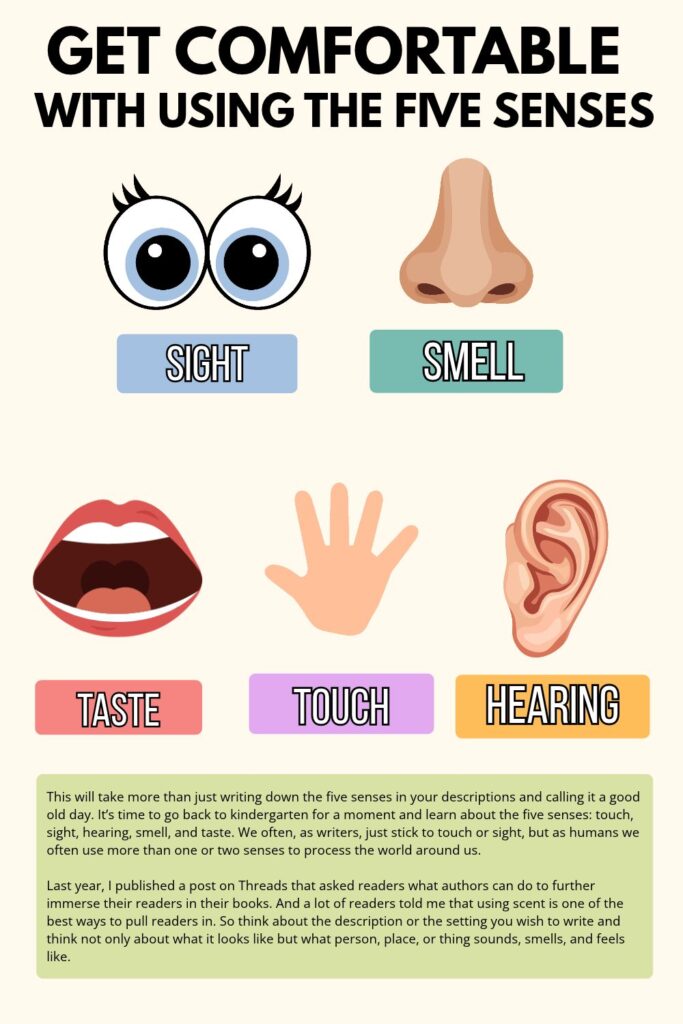
Get comfortable with using the five senses
This will take more than just writing down the five senses in your descriptions and calling it a good old day. It’s time to go back to kindergarten for a moment and learn about the five senses: touch, sight, hearing, smell, and taste. We often, as writers, just stick to touch or sight, but as humans we often use more than one or two senses to process the world around us.
Last year, I published a post on Threads that asked readers what authors can do to further immerse their readers in their books. And a lot of readers told me that using scent is one of the best ways to pull readers in. So think about the description or the setting you wish to write and think not only about what it looks like but what person, place, or thing sounds, smells, and feels like.
The Photo Method
There are writers who can imagine a whole scene in their head without any additional help. Their imagination is so vivid it’s like a movie in their head. I am not one of these writers. I need a photo or illustration to get a good idea of what a setting or a character looks like.
I am often on Pinterest or on Google Images looking for face claims (celebrities, actors, models that fit the physical look of your characters) and images that fit potential settings.
Pick a photo that will fit your character or the setting you want.
Remember, if you are going to share this photo publicly, you should pick photos or art that is licensed for commercial use because you do not want to be sued by the copyright owner.
Study the photo closely. What are the things that stand out to you? Pick out five things from the photo and write them down in your story notes. Then, when you are done, add sensory information:
- What does this person feel like?
- What do they smell like?
- How do they talk?
If you write about the setting, then ask yourself these questions:
- What does the place look like?
- What are the objects, style, or décor of the room?
- What does it smell like?
- What can you hear from both inside and outside of the room?
These details will create a whole mental experience for your readers and make it easier for them to love your book.

Use Your Imagination
I know that this can be harder for some than others. But if you can use your imagination in this way, then imagine your character standing in the setting you want to describe. I want you to ask yourself these questions:
- What do you feel?
- What do you smell?
- What are the things that make the setting stand out?
If you are trying to describe a character, then ask yourself these questions:
- What facial features does your character have that make them stand out?
- What facial features stand out?
- What distinguishing marks do they have?
- Do they walk a certain way?
- Do they have a signature scent?
- What does their voice sound like?
- Does your character have an accent?
All of these techniques have worked to make me a better writer. They have also made my writing descriptions stand out. These days, I often get compliments from readers that they felt like they were standing in my settings as they read or that my settings feel like a third character in my story—which is exactly the effect I was going for.
Now, you try it! See if you can use these tips with your own writing and let me know what you think. Do you have any tips that worked for you? Anything I missed? Let me know down in the comments!

Discover more from Loud In The Margins
Subscribe to get the latest posts sent to your email.


Leave a Comment