
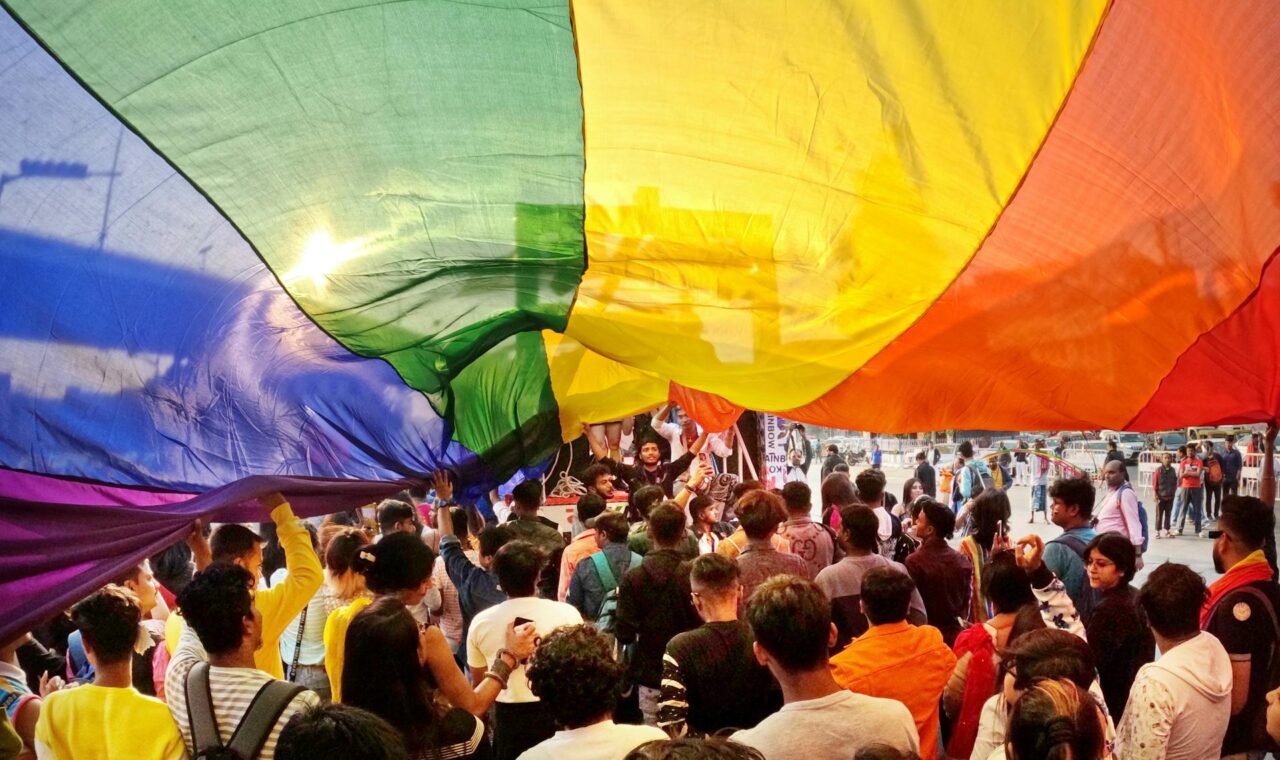
Happy Pride Month! This month is a time to celebrate the LGBTQ+ community, but it is also a time to raise awareness about what it means to be a part of this large, vibrant, diverse space, as well as the many issues we face.
In that spirit, this year I want to recommend LGBT non-fiction books that highlight diverse queer and trans voices within the LGBTQ+ community.
Let’s get started shall, we?
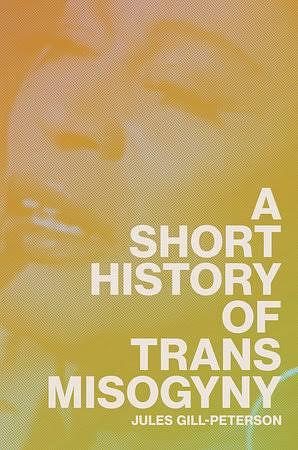
1. A Short History of Trans Misogyny by Jules Gill-Peterson
A Short History of Transmisogyny is the first book-length study to answer these urgent but long overdue questions. Combining new historical analysis with political and activist accessibility, the book shows why it matters to understand trans misogyny as a specific form of violence with a documentable history. Ironically, it is through attending to the specificity of trans misogyny that trans women are no longer treated as inevitably tragic figures. They emerge instead as embattled but tenacious, locked in a struggle over the meaning and material stakes of gender, labor, race, and freedom.
The book shows how trans femininity has become legible as a fault line of broader global histories, including colonial government, the sex work industry, the policing of urban public space, and the line between the formal and informal economy. This transnational and intersectional approach reinforces that trans women are not isolated social subjects who appear alone; they are in fact central to the modern social world.
The book travels across bustling port cities like New York, New Orleans, London and Paris, the colonial and military districts of the British Raj, the Philippines, and Hawai’i, and the lively travesti communities of Latin America.
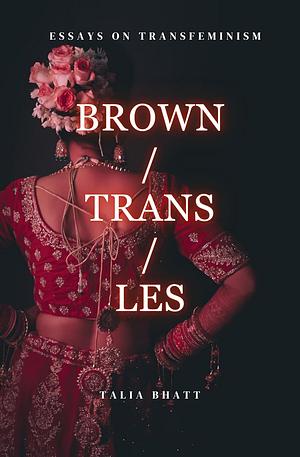
2. Brown/Trans/Les by Talia Bhatt
“Talia Bhatt’s Trans/Rad/Fem is like a shot of ice-cold aqvavit and a roundhouse slap to the face. Read it.” – Sandy Stone, foundational scholar of the field of Transgender Studies.
How does one articulate a cohesive feminism in a culture whose most-spoken language lacks a word for ‘misogyny’?
In Trans/Rad/Fem, radical transfeminist Talia Bhatt attempted to provide a thorough, materialist framework for understanding the oppression of trans women particularly and all queer people generally as an indelible component of patriarchal misogyny. A key facet of that oppression is epistemicide, the totalizing erasure of knowledge, language, and history in order to prevent the marginalized from so much as being able to conceptualize, let alone articulate, the terms of their oppression.
Transmisogyny is far from the only force that is animated by epistemic injustice, however. Few cultures illustrate the truth of that assertion better than the land of Bhatt’s birth, a nation dogged by internal contradictions and fractious violence along the lines of caste, class, religion, nationality, and more, before even considering the matter of sex.
In this text, Bhatt attempts to reckon with the sheer scale and magnitude of the challenge that her motherland poses, and asks: is it even possible to articulate something akin to “desi feminism” or “Third World Feminism” without flattening, homogenizing, and simplifying the ills of a land ravaged by forces as disparate as colonialism, communal violence, and homegrown theocratic fascism? The answer, she hopes, is “yes”.
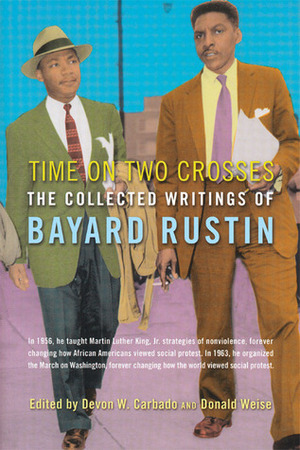
3. Time on Two Crosses by Bayard Rustin
Bayard Rustin, the famed openly-gay African American organizer, introduced Martin Luther King, Jr. to the precepts of nonviolence during the Montgomery Bus Boycott, thereby launching the birth of the Civil Rights Movement in 1955. Widely acclaimed as a founding father of modern black protest, Rustin reached his pinnacle of notoriety in 1963 as organizer of the March on Washington.
Long before the March on Washington and King’s ascendance to international prominence, Rustin put his life on the line to challenge racial segregation. His open homosexuality, however, remained a point of contention among black church leaders, with controversy sometimes embroiling even King himself.
Time on Two Crosses showcases the extraordinary career of this black gay civil rights pioneer. Spanning five decades, the book combines classic texts ranging in topic from Gandhi’s impact on African Americans, white supremacists in Congress, the antiwar movement, and the assassination of Malcolm X, with never-before published selections on the call for gay rights, Louis Farrakhan, affirmative action, AIDS, and women’s rights. Also included are twenty-five photos from the Rustin estate.
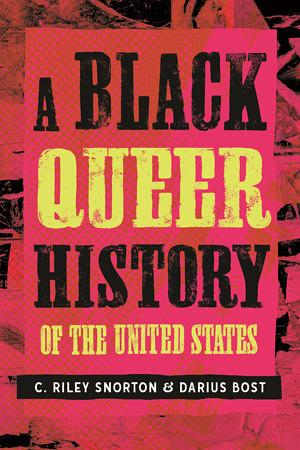
4. A Black Queer History of the United States by Darius Bost
The first-ever Black history to center queer voices, this landmark study traces the lives of LGBTQ+ Black Americans from slavery to present day
Gender and sexual expression have always been part of the Black freedom struggle
In this latest book in Beacon’s award-winning ReVisioning History series, Professors C. Riley Snorton and Darius Bost unearth the often overlooked history of the Black queer community in the United States.
Arguing that both gender and sexual expression have been an intimate and intricate part of Black freedom struggle, Snorton and Bost present historical contributions of Black queer, trans, and gender non-conforming Americans from slavery to the present day to highlight how the fight against racial injustice has always been linked to that of sexual and gender justice.
Interweaving stories of queer and trans figures such as:
- Private William Cathay/Cathay Williams, born female but enlisted in the Army as a man in the mid-1860s
- Josephine Baker, internationally known dancer and entertainer of the early 20th century who was also openly bisexual
- Bayard Rustin, prominent Civil Rights activist whose well known homosexuality was viewed as a potential threat to the movement
- Amanda Milan, a black trans woman whose murder in 2000 unified the trans people of color community,
this book includes a deep dive into the marginalization, unjust criminalization, and government legislation of Black queer and trans existence. It also shows how Black Americans have played an integral role in the modern LGBTQ rights movement, countering narratives that have predominantly focused on white Americans.Through storytelling and other narratives, Snorton and Bost show how the Black queer community has always existed, regardless of the attempts to stamp it out, and how those in it continue to fight for their rightful place in the world.
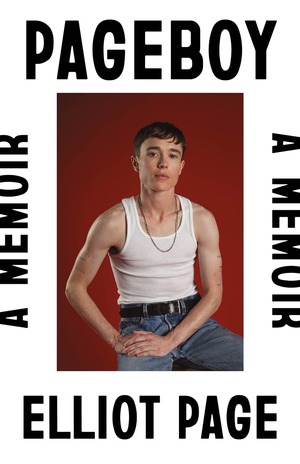
5. Pageboy by Elliot Page
The Oscar-nominated star who captivated the world with his performance in Juno finally shares his truth.
“Can I kiss you?” It was two months before the world premiere of Juno, and Elliot Page was in his first ever queer bar. The hot summer air hung heavy around him as he looked at her. And then it happened. In front of everyone. A previously unfathomable experience. Here he was on the precipice of discovering himself as a queer person, as a trans person. Getting closer to his desires, his dreams, himself, without the repression he’d carried for so long. But for Elliot, two steps forward had always come with one step back.
With Juno’s massive success, Elliot became one of the world’s most beloved actors. His dreams were coming true, but the pressure to perform suffocated him. He was forced to play the part of the glossy young starlet, a role that made his skin crawl, on and off set. The career that had been an escape out of his reality and into a world of imagination was suddenly a nightmare.
As he navigated criticism and abuse from some of the most powerful people in Hollywood, a past that snapped at his heels, and a society dead set on forcing him into a binary, Elliot often stayed silent, unsure of what to do, until enough was enough. Full of behind the scenes details and intimate interrogations on sex, love, trauma, and Hollywood, Pageboy is the story of a life pushed to the brink. But at its core, this beautifully written, winding journey of what it means to untangle ourselves from the expectations of others is an ode to stepping into who we truly are with defiance, strength, and joy.
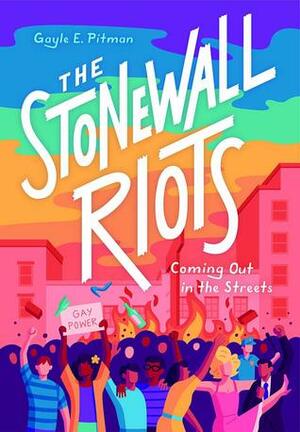
6. The Stonewall Riots: Coming Out in the Streets by Gayle E Pitman
This book is about the Stonewall Riots, a series of spontaneous, often violent demonstrations by members of the gay (LGBTQ+) community in reaction to a police raid that took place in the early morning hours of June 28, 1969, at the Stonewall Inn in the Greenwich Village neighborhood of Manhattan, New York City. The Riots are attributed as the spark that ignited the LGBTQ+ movement. The author describes American gay history leading up to the Riots, the Riots themselves, and the aftermath, and includes her interviews of people involved or witnesses, including a woman who was ten at the time. Profusely illustrated, the book includes contemporary photos, newspaper clippings, and other period objects. A timely and necessary read, The Stonewall Riots helps readers to understand the history and legacy of the LGBTQ+ movement.
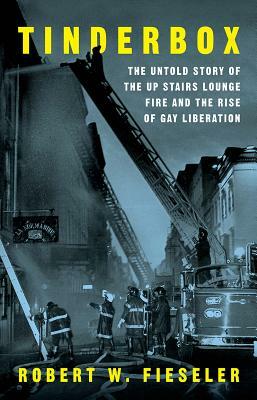
7. Tinderbox: The Untold Story of the Up Stairs Lounge Fire by Robert Fieseler
Buried for decades, the Up Stairs Lounge tragedy has only recently emerged as a catalyzing event of the gay liberation movement. In revelatory detail, Robert W. Fieseler chronicles the tragic event that claimed the lives of thirty-one men and one woman on June 24, 1973, at a New Orleans bar, the largest mass murder of gays until 2016. Relying on unprecedented access to survivors and archives, Fieseler creates an indelible portrait of a closeted, blue- collar gay world that flourished before an arsonist ignited an inferno that destroyed an entire community.
The aftermath was no less traumatic―families ashamed to claim loved ones, the Catholic Church refusing proper burial rights, the city impervious to the survivors’ needs―revealing a world of toxic prejudice that thrived well past Stonewall. Yet the impassioned activism that followed proved essential to the emergence of a fledgling gay movement. Tinderbox restores honor to a forgotten generation of civil-rights martyrs.
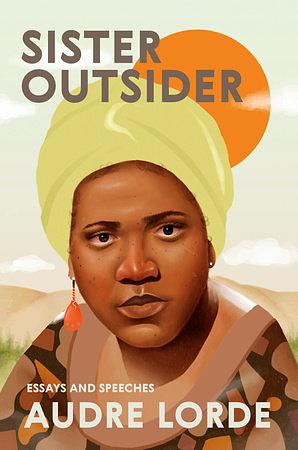
8. Sister Outsider by Audre Lorde
A collection of fifteen essays written between 1976 and 1984 gives clear voice to Audre Lorde’s literary and philosophical personae. These essays explore and illuminate the roots of Lorde’s intellectual development and her deep-seated and longstanding concerns about ways of increasing empowerment among minority women writers and the absolute necessity to explicate the concept of difference—difference according to sex, race, and economic status. The title Sister Outsider finds its source in her poetry collection The Black Unicorn (1978). These poems and the essays in Sister Outsider stress Lorde’s oft-stated theme of continuity, particularly of the geographical and intellectual link between Dahomey, Africa, and her emerging self.
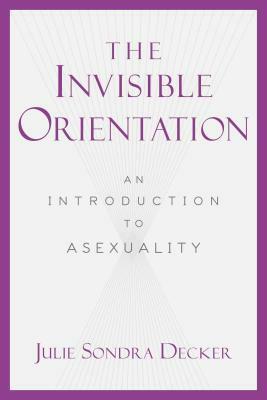
9. The Invisible Orientation by Julie Sondra Decker
What if you weren’t sexually attracted to anyone?
A growing number of people are identifying as asexual. They aren’t sexually attracted to anyone, and they consider it a sexual orientation–like gay, straight, or bisexual.
Asexuality is the invisible orientation. Most people believe that “everyone” wants sex, that “everyone” understands what it means to be attracted to other people, and that “everyone” wants to date and mate. But that’s where asexual people are left out–they don’t find other people sexually attractive, and if and when they say so, they are very rarely treated as though that’s okay.
When an asexual person comes out, alarming reactions regularly follow; loved ones fear that an asexual person is sick, or psychologically warped, or suffering from abuse. Critics confront asexual people with accusations of following a fad, hiding homosexuality, or making excuses for romantic failures. And all of this contributes to a discouraging master narrative: there is no such thing as “asexual.” Being an asexual person is a lie or an illness, and it needs to be fixed.
In The Invisible Orientation, Julie Sondra Decker outlines what asexuality is, counters misconceptions, provides resources, and puts asexual people’s experiences in context as they move through a very sexualized world. It includes information for asexual people to help understand their orientation and what it means for their relationships, as well as tips and facts for those who want to understand their asexual friends and loved ones.
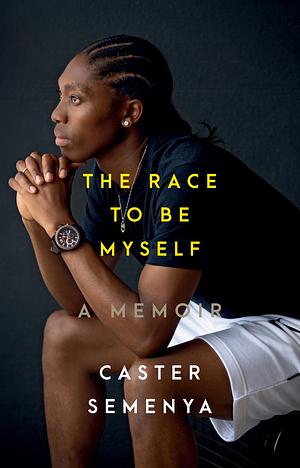
10. The Race to Be Myself by Caster Semenya
Caster Semenya is one of the greatest athletes ever to run the 800 meter. Semenya went undefeated for almost four years, winning two Olympic gold medals and three World Athletics Championships, and set and broke numerous records.
However, her life and career were devastated by accusations that Semenya–who was born with naturally elevated levels of testosterone–was not a woman, and should not compete against other women. Required by the International Association of Athletics Federations to take hormone-altering drugs as a condition of competing in certain events, Semenya for years suffered side effects that she describes as devastating to her health. Her predicament surfaced a still-raging firestorm over our understanding of gender and, of how gender plays out in sports, as well as our expectations of female athletes.
11. Cripping Intersex by Celeste E. Orr
Intersex and/as/is/with disability. The political, discursive, and embodied connections between intersex and disability deserve nuanced attention if we are to strengthen intersex human rights claims and reflect the experiences of intersex people living with the disabling consequences of medical intervention.
Cripping Intersex examines three key themes: the medical management of people with intersex characteristics; the mainstream, academic, and medical fascination with sport sex-testing policies and procedures; and the eugenic implications of preimplantation genetic diagnosis, a reproductive screening technology that can accompany in vitro fertilization. Celeste E. Orr investigates how intersex and interphobia intersect with disability and activism to propose a new field – crip intersex studies – and argues for a crip approach to intersex activism. In integrating feminist disability studies with intersex studies, they also provide tools to break down both the traditional sex dyad and the entrenched cultural mandate against intersex traits.
Cripping Intersex advances a critique of the ways in which attempts to exorcise intersex variations are a form of medical violence to offer a radical new understanding of intersex-with-disability. In the process, this necessary work pushes analyses of intersex histories, experience, and embodiment further than feminist or queer theory can do alone.
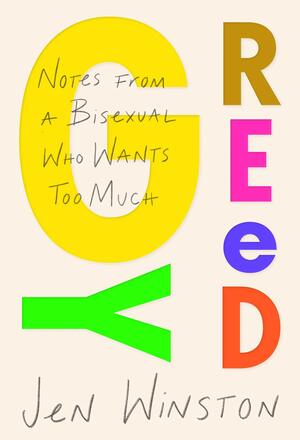
12. Greedy by Jen Winston
If Jen Winston knows one thing for sure, it’s that she’s bisexual. Or wait–maybe she isn’t? Actually, she definitely is. Unless…she’s not?
Jen’s provocative, laugh-out-loud debut takes us inside her journey of self-discovery, leading us through stories of a childhood “girl crush,” an onerous quest to have a threesome, and an enduring fear of being bad at sex. Greedy follows Jen’s attempts to make sense of herself as she explores the role of the male gaze, what it means to be “queer enough,” and how to overcome bi stereotypes when you’re the posterchild for all of them: greedy, slutty, and constantly confused.
With her clever voice and clear-eyed insight, Jen draws on personal experiences with sexism and biphobia to understand how we all can and must do better. She sheds light on the reasons women, queer people, and other marginalized groups tend to make ourselves smaller, provoking the question: What would happen if we suddenly stopped?
Greedy shows us that being bisexual is about so much more than who you’re sleeping with–it’s about finding stability in a state of flux and defining yourself on your own terms. This book inspires us to rethink the world as we know it, reminding us that Greedy was a superpower all along.
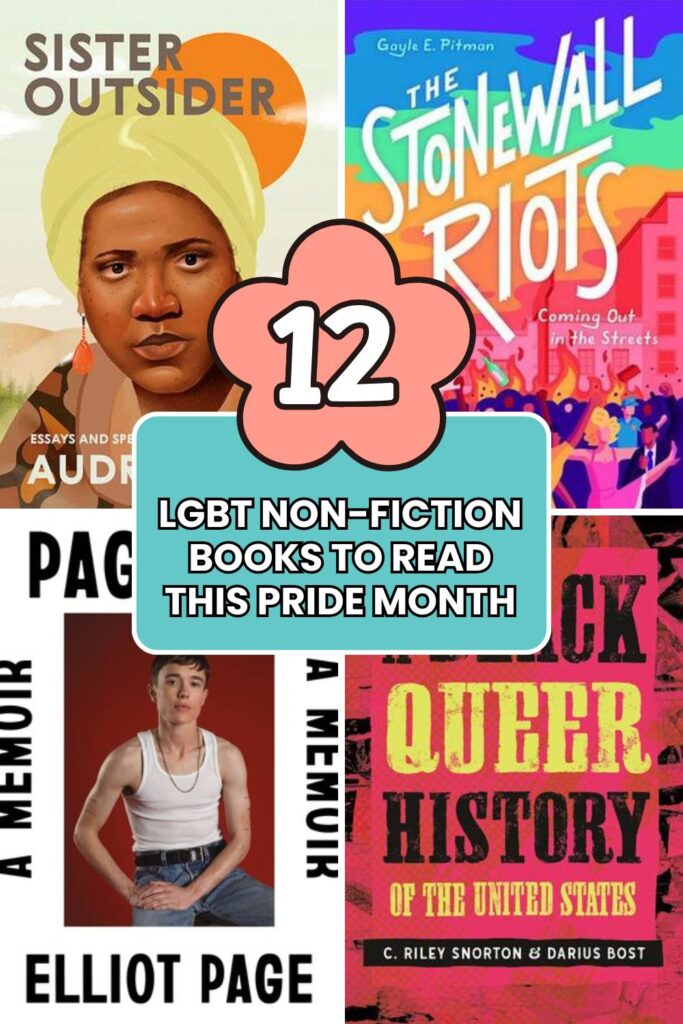
These are my top 12 LGBT non-fiction books that you should definitely add to your tbr? Do you have a suggestion to add to the list? What do you think of my picks? Let me know down in the comments!
Pin This
Discover more from Loud In The Margins
Subscribe to get the latest posts sent to your email.



Leave a Comment