
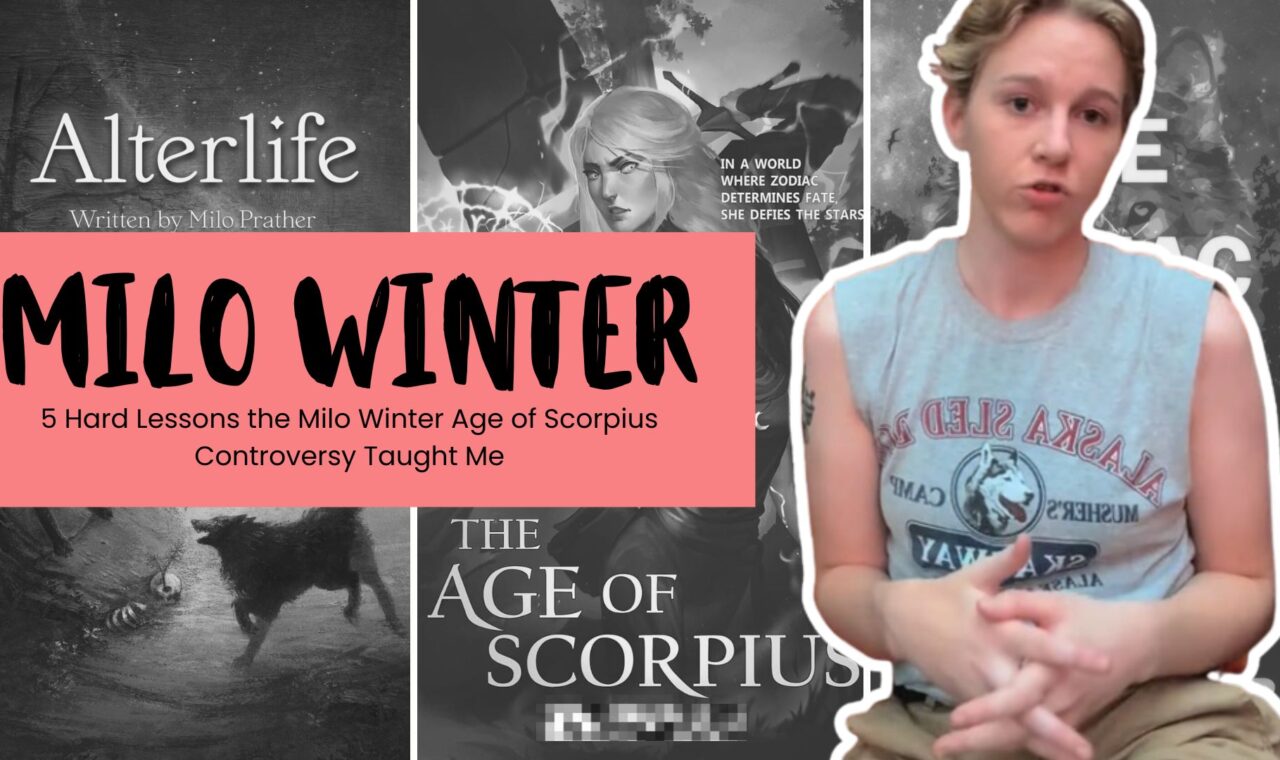
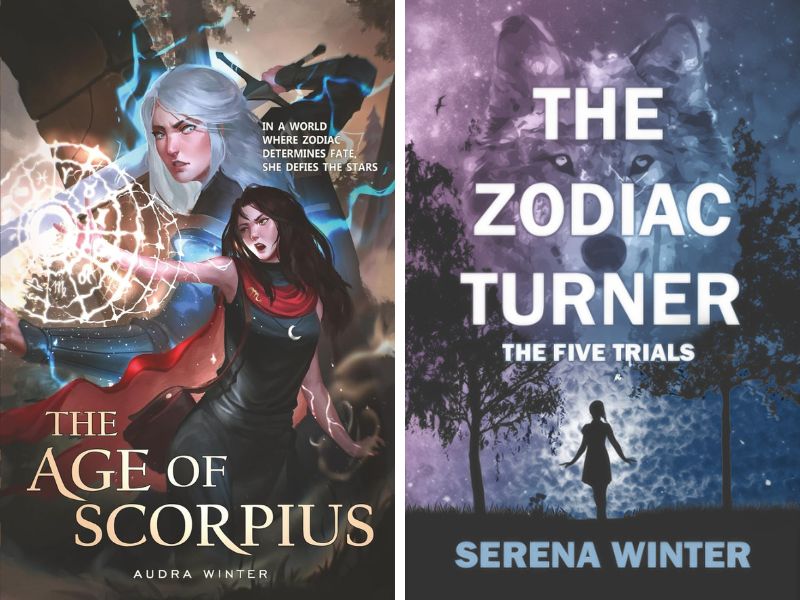
Milo Winter has been a name that has been on my lips for several months now. However, if you don’t know, Milo Winter is a queer, autistic young adult author of the book Age of Scorpius. After months of extremely effective marketing, his readers pre-ordered over six thousand books.
However, readers became outraged when they opened their books and discovered prose that strongly resembled a twelve-year-old’s first draft. He apparently convinced folks to pre-order by spinning a yarn about writing his very first book at age twelve and then tweaking it for a decade.
However, what Milo didn’t tell anyone was that he was not a debut author, and this was, in fact, his second time publishing this book. In my opinion, I believe Milo deliberately deceived his audience by publishing a clearly unpolished first draft of this book not once but TWICE.
But just when I thought things couldn’t get any worse. Milo published a poetry book called Afterlife under the name of Milo Prathers back in December. And the reviews for that collection are not great either.
I could go on and on about this saga because the more Milo reveals about this book, the more questions I have about his writing process, his editors, and the way he does business.
Buckle up for another tangent!
Milo loves to brag about being an entrepreneur, like it’s something special. When in reality, if you are an indie author? You are automatically a small business owner and an entrepreneur. Even if you only make $5 a year in book sales, you are still an entrepreneur.
Being an entrepreneur is not about how much money you make; it’s about coming up with an idea for a product or service and then selling it. And indie authors do this every time they come up with a new book idea, write it, and publish it.
However, as I said earlier, my biggest problem with Milo is how he does business. There are too many people in his “art studio” who are not getting paid their worth. And it’s one thing if you are a poor indie author just trying to make it, but Milo loves to boast that He put every dollar He made in pre-orders back into his business.
But it’s clearly not going to the artists and the editors. Milo has them doing multiple jobs. Doing work they are clearly not qualified for, and then on top of that, have to take part in hours-long consulting meetings with Milo. In my opinion, it stinks of exploitation.
It’s also clear that his timeline for the re-release of Age of Scorpius was a little too ambitious and that his Patreon account is only a tool to play in his readers’ faces. Especially since Milo has left the U.S. to backpack through Europe.
But don’t worry, Milo has tons of time to make jokes about being the worst fantasy author of 2025.
As I said before, the saga of Milo Winters is long and exhausting. I could be here literally all day explaining it to you so I am going to link videos from Laura Rae Says (formley Book Lover Laura)’s playlist, VangelinaSkov’s youtube channel, Dr. Joely Black’s video on this from an autistic perspective, and the breakdown on why Milo’s new poetry collection sucks from SBU English Club.
But I digress; let’s get back to my point.
What I Learned From Milo Winter
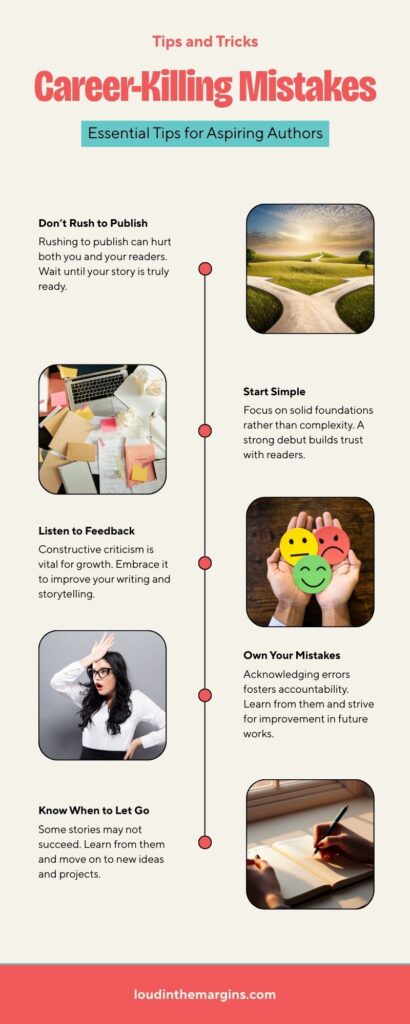
1) Don’t Rush to Publish
I understand we are all just hyped to put our stories out there, but you are not only doing a disservice to yourself but also to your readers by rushing to publish. Your story will be done when it’s done.
2) Listening to Outside Feedback Is Super Important
I always get pushback when I say that every author should get at least one feedback cycle from someone else. And I still stand by that! However, while it is necessary to get feedback, it’s just as important to REALLY LISTEN to that feedback. So many authors (both big-time traditional authors and newbie indie authors) let their ego get in the way of writing a good book.
I am not saying you take everything your editor has to say as gospel. Sure, you can argue with your editor, but it’s a waste of your time and money to completely ignore their feedback.
3) You Need To Know When To Let A Story Go
This is the hardest lesson an author has to learn. As authors, we often get caught up in the sunk/cost fallacy. Just like Milo, many of us have spent years on a manuscript (for me, it was 2 years), and we can’t let it go because that would mean that we wasted our time on something that went nowhere.
It’s okay when that happens. Sometimes a story is just a lesson that we need to learn. And most of us will take the parts we love about that manuscript and put them in another manuscript. Let it go!
4) Start Simple
Yes, as a debut author, you want to start with a bang. You think your debut book has to have all the bells and whistles to stand out. When in reality, think about the long game. Your first book is all about building trust with your readers. Essentially, you are proving to them you can write a satisfying book. This is how you build a real readership, and spending all of your money on art or a badass cover instead of editing is a good way to erode that trust quickly.
The real money is in the backlist.
Your debut will probably not make much money, but that debut is a stepping stone to building a backlist (and a readership) that eventually will. I would rather you have a free Canva book cover and spend all of your money on editing than for you to invest in a fantastic book cover.
Start out small and then build your way up!
5) Own Up to Your Mistakes
When you fuck up (and we all fuck up), it’s important to do three things: own the fuck up, apologize for that fuck up, and try to do better.
And when it comes to the Milo Winter situation, it is easy to see the “apology” he made and think that is enough. It is not only because Milo is still lying to his readers, but it’s been very clear from his own actions that he has learned nothing from last year’s controversy. If you ever gave even a quick scan of the excerpts from Age of Scorpius, most of us can tell that it’s a first draft.
But Milo will argue with you up and down that his book went through multiple and exhaustive editing cycles.
And the thing about a lot of the mistakes in Age of Scorpius is that he made obvious amateur mistakes that any editor worth their salt would immediately clock.
In my opinion, the moment Milo clicked the publish button; he knew he was screwing over his readers. And as Milo has bragged about, every cent of those pre-orders went back into his business.
This is not what holding yourself accountable looks like.
In conclusion
Writing is not only an art, but it’s also a skill that has to be constantly honed. A part of this process is allowing feedback and using that feedback to make a better book. As an author, the trust of your readers is the most important thing.
Because you are not writing just for yourself. If you are an author, you are creating a product that you are going to sell to your readers (customers). And not producing books to the best of your ability will not only destroy your reader’s trust.
Once your reader’s trust is gone, it’s nearly impossible to get it back.
Pin This
Discover more from Loud In The Margins
Subscribe to get the latest posts sent to your email.




Leave a Comment